
Indoor Air Quality Service in Fort Worth & Tarrant County
Cleaner air at home starts with the system you already own: the right filter, ducts that don’t leak attic air, and a coil and drain pan that stay dry. Our techs look at all three.
Request Service
Tell us what's going on and the office will call you back to set a time.
Rather pick a time yourself? Book online
Air quality
What does indoor air quality service cover?
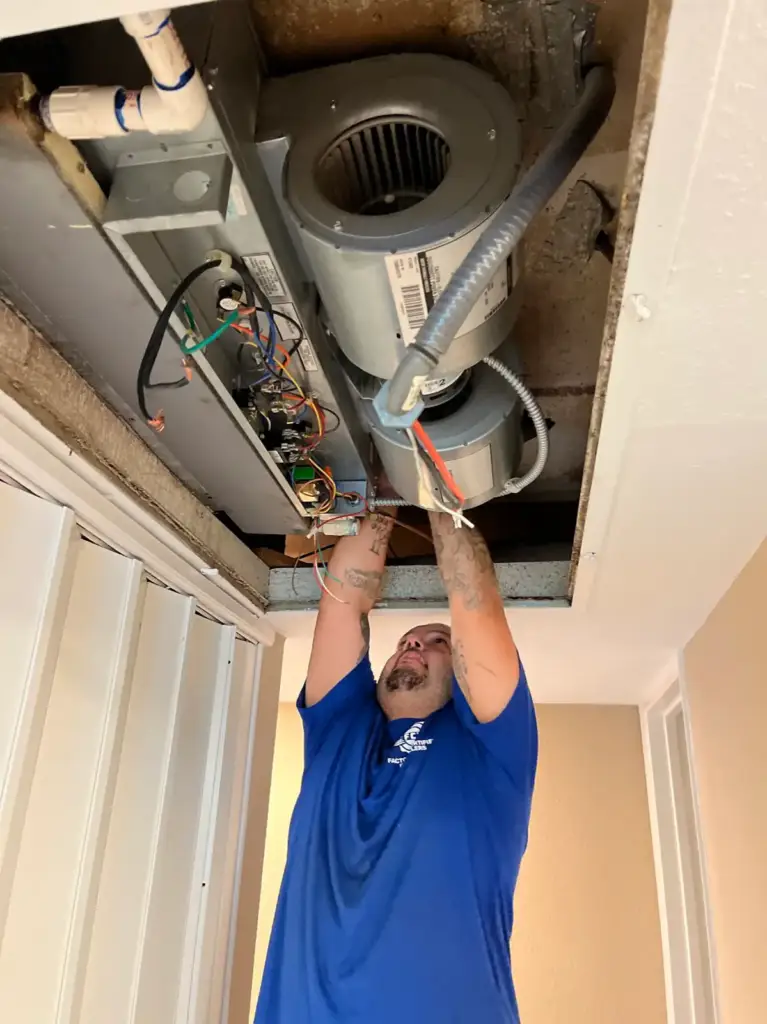
Three parts of your heating and cooling system. The filter, sized and rated for your blower. The ducts, checked for dust, debris, leaks and loose connections. And the wet parts, the coil and drain pan, where summer condensation can grow mold if water sits. Our tech photographs what turns up and walks you through it before suggesting anything.
- Filter replacement and sizing
- Higher-MERV filters where the blower can take them
- Air duct cleaning
- Duct and vent repair and installation
- Sealing leaky duct joints with mastic
- Condensate drain line and pan checks
- UV light where mold grows on a wet coil
- Dust, stuffiness and musty smells
Indoor Air Quality
Cleaner air or cleaner ducts?
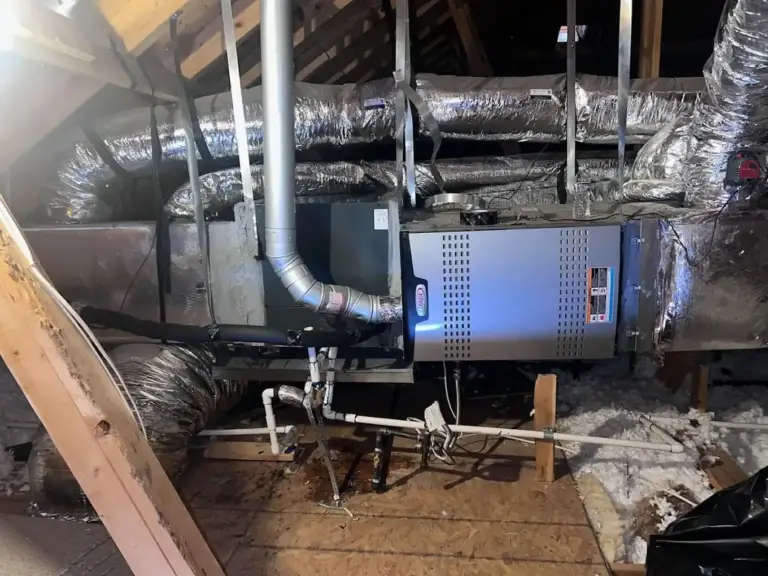
Start with what you see at the vents. Thick dust or debris blowing out, mold you can see inside hard ducts, or signs that rodents or insects got into the ductwork are the three cases where EPA says cleaning is worth considering, and they belong on our air duct cleaning page. Dust that comes back fast, a stuffy back bedroom or a musty smell at start-up usually traces to the filter, leaky ducts or a wet drain pan, all covered here.
Air Duct Cleaning
Air ducts and vents cleaned, repaired and sealed.
Good to know
Do I need an air purifier or just a better filter?
Start with the filter slot you already have. EPA’s guide to air cleaners puts removing pollutant sources and ventilating first, with filtration as a supplement, and suggests a filter rated at least MERV 13 or as high as your system will accommodate. Our tech checks the blower and filter rack before you move up a rating.
Before we look at your air
- Slide out the filter and check the size printed on its frame, and how gray it looks.
- Notice which rooms collect dust fastest, or run warmer or cooler than the rest.
- Look at the supply registers for dark streaks, or dust puffing out when the system starts.
- If someone at home has asthma or allergies, mention it so the options fit the household.
- Call (682) 474-0599 or book online and tell the office what you’ve noticed.

The rules
What does a MERV rating tell you about a filter?
How well it traps small particles. EPA explains that MERV runs up to 16, and the higher the number, the better a filter catches particles from 0.3 to 10 microns. Its advice is to use the highest rating your system fan and filter slot can handle, with MERV 13 or above as the goal when the system allows it.
MERV 13the minimum EPA suggests when your system’s fan and filter slot can take it
EPA’s What is a MERV rating? page also suggests asking an HVAC technician which filter is the most efficient one that still works well with your system. Its Guide to Air Cleaners in the Home says filters rated MERV 13 and above have to show at least 50% removal efficiency in testing, and that you should replace filters on the manufacturer’s schedule. A thicker filter that chokes the blower trades one problem for another, which is why the tech looks at the system first.
How the visit runs
How an indoor air quality visit runs
- Book the visitCall or book online; a reminder comes before the appointment and a text when the tech is on the way.
- Look at the systemFilter, blower, coil, drain pan and the ducts within reach in the attic all get checked.
- Photos and optionsYou see pictures of what was found and hear the choices, with prices before any work.
- Do the workA new filter, duct sealing, cleaning or a drain fix, limited to what you said yes to.
- Keep it cleanWe go over filter timing and offer the Protection Club's two tune-ups a year.
From a customer
What have customers said about air quality findings?
Rem A. wrote that David Garcia “saw mold growing due to condensation and recommended installing a UV light to address issue,” and that he “properly explained findings.” Thomas K. said Brandon “thoroughly cleaned the condensate drain lines” and recommended adding a float switch to protect the system from water damage.
“Technician David Garcia did a very thorough job inspecting the unit and finding issues and made recommendations to address the issues. He saw mold growing due to condensation and recommended installing a UV light to address issue.”
FAQ
Indoor Air Questions from Tarrant County Homes
How often should the filter be changed?
Follow the filter maker’s schedule, and look at it monthly while the system runs hard. EPA’s guide to air cleaners is plain that a filter that’s dirty and overloaded won’t work well. In North Texas the system can run heat in January and cooling in June with few months off, so a filter left in since spring is often packed by fall.
Can a UV light take care of mold on my AC coil?
It can help, but it isn’t the first fix. EPA says a properly designed UV unit may destroy some mold growing on moist HVAC surfaces like cooling coils and drain pans, and that typical home units have limited effect. When a tech finds mold from condensation, the drain and the moisture get fixed, and a UV light is an option on top of that.
Why does my house get dusty so fast?
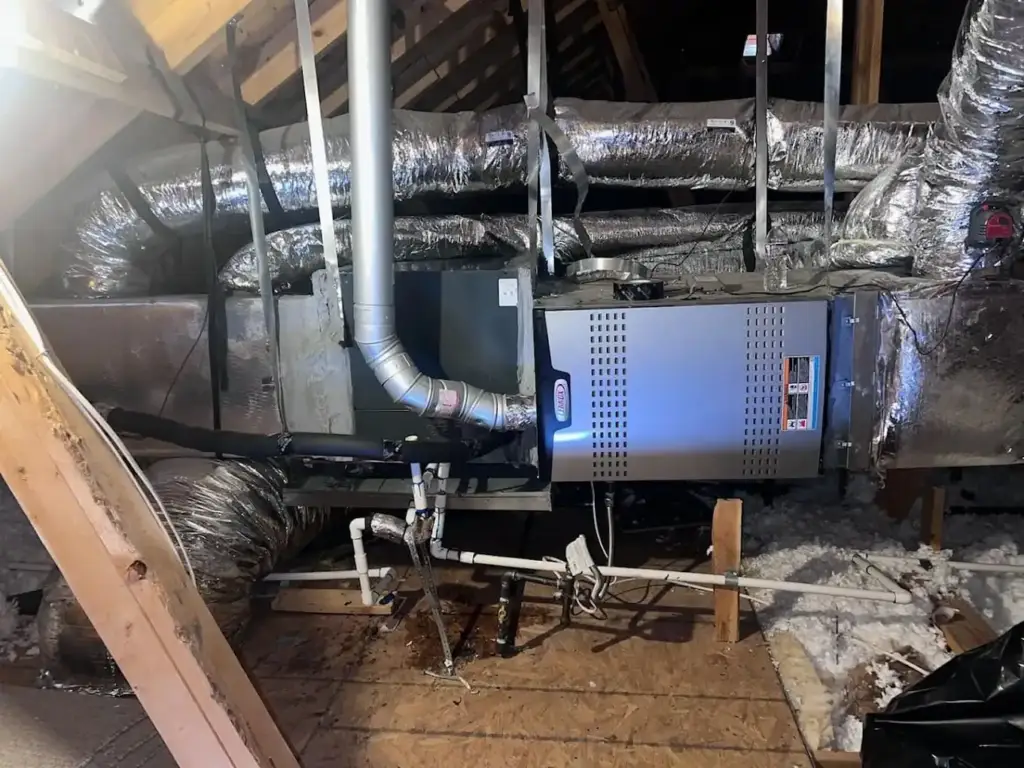
Leaky ducts are a common cause. The Department of Energy says about 20% to 30% of the air moving through a duct system is lost to leaks, holes and poorly connected ducts. With the system in the attic, a leak on the return side can pull dusty attic air into the house. Sealing those joints, plus the right filter, often does more than cleaning.
Can a higher-rated filter hurt my system?
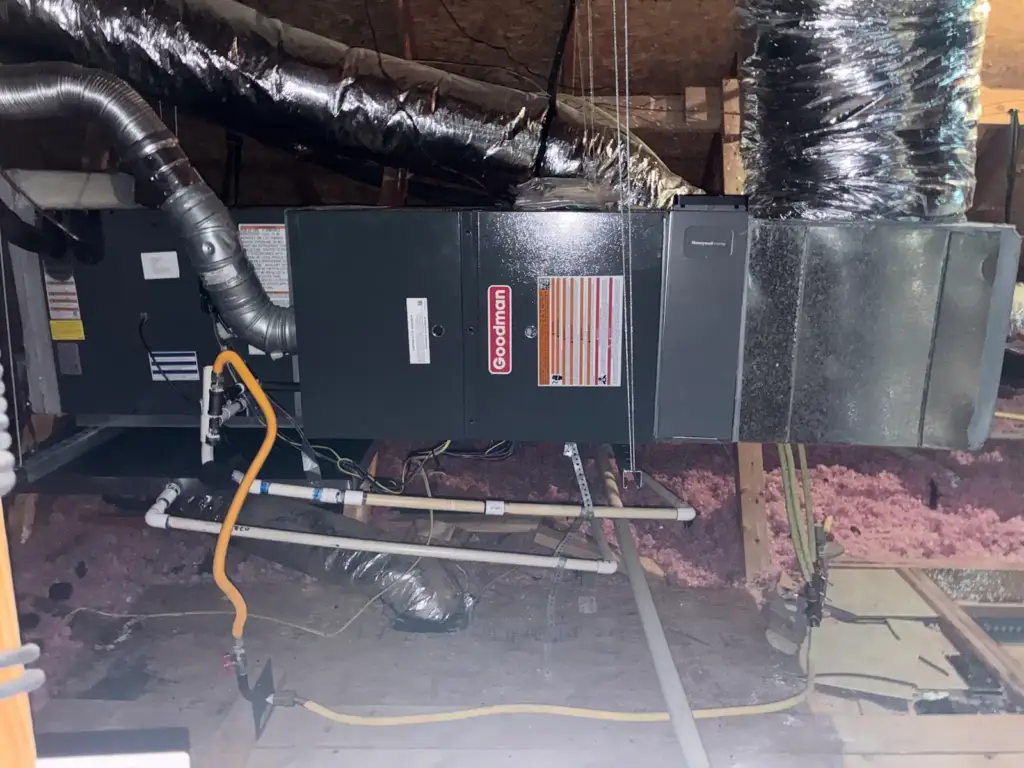
It can if the blower wasn’t built for it. A filter that’s too restrictive cuts airflow, which can freeze an AC coil in August or trip a furnace’s limit switch on a cold night. The tech looks at the blower, the return and the filter rack, then tells you the size and rating to buy so the next one fits right.
What's that musty smell when the AC kicks on?
Usually water that isn’t draining. The coil sweats all summer in North Texas, and that water runs to a pan and a condensate line, often in the attic. If the line clogs, water sits and smells. EPA’s duct guidance calls controlling moisture the most effective way to prevent biological growth in ducts, so clearing the line comes first.
Service area
Where do you do indoor air quality work?
From Golden Heights Rd near I-35W, our Fort Worth office sends techs to Haslet, Keller, Watauga, Haltom City, Benbrook and Granbury, and east to Arlington and Mansfield. Visits on the northwest side start at the Saginaw office on W Lemon St, near Saginaw Blvd, which serves Lake Worth, Azle, Sansom Park, Blue Mound and Rhome.
- Fort Worth, TX
- Saginaw, TX
- Haslet, TX
- Lake Worth, TX
- Blue Mound, TX
- Sansom Park, TX
- Azle, TX
- Springtown, TX
- Reno, TX
- Rhome, TX
- Keller, TX
- Roanoke, TX
- Watauga, TX
- North Richland Hills, TX
- Haltom City, TX
- Southlake, TX
- Hurst, TX
- Euless, TX
- Bedford, TX
- Grapevine, TX
- Arlington, TX
- Mansfield, TX
- Burleson, TX
- Benbrook, TX
- Granbury, TX
- Weatherford, TX
- Crowley, TX
- Everman, TX
- Rendon, TX
- Joshua, TX
- Godley, TX
- Alvarado, TX
- Keene, TX
- Venus, TX
- All service areas
Related services
Other services that keep the air cleaner

Talk to Eric's team
Dusty, stuffy or musty at home?
Book online or call (682) 474-0599, and a tech will look at the filter, ducts and drain, show you photos, and price any fix before doing it.